

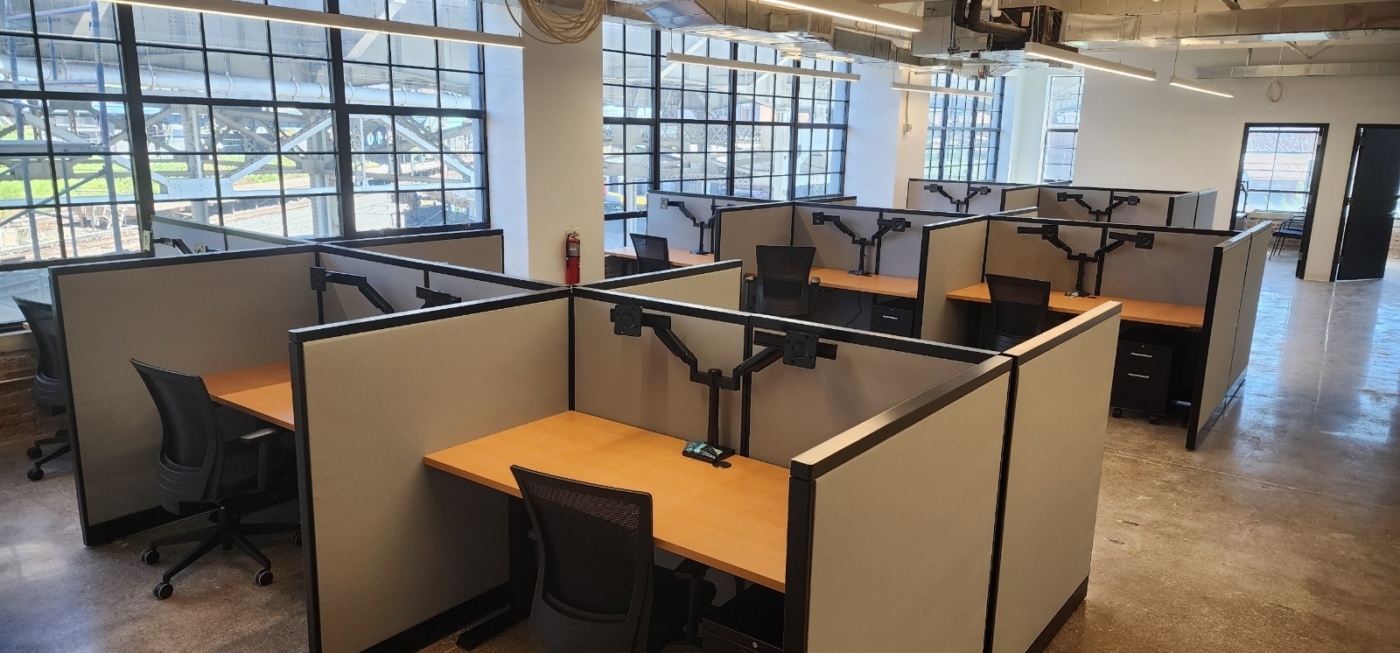
Searching “used office furniture near me” usually means one of two things: you’re furnishing an office on a tight budget and need it to still look professional, or you’re trying to add desks and seating fast without waiting out a months-long lead time on new furniture. The good news is that the used and pre-owned office furniture market has grown into a legitimate, well-stocked category — not just a garage-sale afterthought — and for most businesses it’s genuinely the smarter buy, not just the cheaper one.
The tricky part is that “used office furniture near me” brings up a mix of very different sources: specialty dealers, online marketplaces, auction liquidators, and big-box used furniture warehouses — and they aren’t interchangeable. This guide walks through where to look, what separates a good deal from a costly mistake, how much you can realistically save, and the questions worth asking before you buy anything.
Used, Pre-Owned, and Remanufactured Aren’t the Same Thing
Before you start shopping, it helps to know what you’re actually being offered, because these terms get used loosely and the differences affect both price and quality.
Used furniture typically means exactly what it sounds like — furniture pulled from a previous office as-is, with cosmetic wear and no rework done to it. It’s the cheapest tier, and quality varies the most, since condition depends entirely on how the original owner treated it.
Pre-owned furniture usually implies a step up — furniture that’s been inspected, cleaned, and sometimes lightly refurbished (new casters, tightened mechanisms, replaced glides) before resale. It’s still previously owned, but a reputable dealer has done work to ensure it functions properly.
Remanufactured furniture is the most involved category. Reputable remanufacturers disassemble furniture down to the frame, replace worn components (fabric, foam, mechanisms, laminate), and rebuild it to near-original specifications—often with a warranty attached. This is common with major systems furniture brands like Steelcase, Herman Miller, and Haworth, where the underlying frames are built to last decades and the wear items are what actually need replacing.
The price difference between these tiers is real, but so is the difference in what you’re getting. A dealer who’s vague about which category their inventory falls into is usually a sign to ask more questions before you buy.
Where to Actually Look for Affordable Used Office Furniture
Local office furniture dealers who specialize in used, pre-owned, or remanufactured inventory. This is usually the best starting point for a business buying more than a handful of pieces. A dealer with warehouse inventory can show you matching sets, offer some form of warranty, and typically handle delivery and installation—something none of the other sources on this list reliably do.
Online marketplaces (Facebook Marketplace, Craigslist, OfferUp). Good for one-off finds and individual pieces, but inconsistent for outfitting a full office. You’re buying as-is, there’s rarely a warranty, and you’re responsible for transportation, which adds real cost and hassle once you factor in a truck rental and the labor of moving heavy furniture yourself.
Corporate liquidation sales and auctions. When a company downsizes, relocates, or closes, its furniture often goes to auction or a liquidation sale — sometimes at very low prices for large matching lots. The catch is timing: these sales are unpredictable, and you need to move fast and often buy in bulk (an entire floor’s worth of cubicles, for instance) rather than exactly what you need.
National used office furniture warehouses and online retailers. These can offer a wide selection and searchable inventory, but shipping large furniture across the country is expensive and slow, and you lose the ability to physically inspect a piece before it arrives.
Direct from businesses that are downsizing or closing. Networking through local business groups, chambers of commerce, or even simple word of mouth can turn up furniture at a steep discount, sometimes for free if the seller just wants it gone. This takes more legwork but can be the cheapest option of all if the timing lines up.
For most businesses furnishing more than a few desks, a local specialty dealer ends up being the most reliable balance of price, quality, and convenience — you can see and sit in what you’re buying, and someone else handles the truck.
What to Check Before You Buy Anything Used
A few minutes of inspection can save you from a furniture purchase that looks fine in a photo and falls apart in six months.
- Check the frame, not just the fabric. Upholstery and laminate can be refreshed relatively cheaply. A cracked, bent, or structurally compromised frame usually can’t be—that’s what determines whether a piece is actually worth buying used.
- Test every mechanism. Sit in the chair. Raise and lower it. Test the tilt tension and armrests. Open and close every drawer on a filing cabinet or desk pedestal. Mechanical failures are the most common issue with used seating and the most expensive to fix later.
- Ask about matching quantities. If you need 20 workstations to look consistent, confirm the dealer has 20 matching pieces in stock—not 12 in one finish and 8 in a close-but-not-identical one.
- Ask what “inspected” or “refurbished” actually means. Some dealers genuinely test and repair every piece before resale; others use the word loosely. Ask specifically what’s been checked and replaced.
- Find out if delivery and installation are included. This is where a lot of “cheap” furniture gets expensive fast. A $200 chair that costs $150 to deliver and has no one to assemble it isn’t the deal it looked like online.
- Ask about returns or a warranty, even a short one. A dealer willing to stand behind their inventory for even 30 to 90 days is signaling real confidence in what they’re selling. A no-returns, no-exceptions policy on furniture you can’t fully test in a showroom is worth factoring into your decision.
How Much Can You Actually Save?
The savings on used and remanufactured office furniture are real, not just a sales pitch. Depending on condition, brand, and how the piece was sourced, businesses commonly pay 30% to 75% less than the same item new, and dealers specializing in used inventory often quote discounts of 50% to 70% off retail. Startups furnishing a first office from scratch have reported savings of up to 80% compared to an all-new buildout.
A few factors affect where you’ll land in that range:
- Brand matters. Major systems furniture brands (Steelcase, Herman Miller, Haworth) hold their value better used than budget or off-brand furniture, but they also started at a higher price point — so the dollar savings on a used name-brand chair are often larger than on a cheap new one.
- Remanufactured costs more than raw used, but for good reason. You’re paying for labor and replaced components, not just a markup. It typically still lands well below the price of the same item new.
- Buying in matching bulk quantities is usually cheaper per unit than piecing together individual finds. A dealer selling 30 matching workstations from a single corporate liquidation can often price them more aggressively than 30 mismatched pieces sourced one at a time.
Budgeting: Where to Spend New, Where to Buy Used
Very few businesses need to buy everything new or everything used — the smartest approach is usually a blend.
- Weight new furniture toward what clients and candidates actually see. Reception areas and conference rooms are worth the investment in new, on-brand furniture, since that’s the space making a first impression.
- Buy used or remanufactured for everything else. Individual workstations, break rooms, storage, and back-office furniture are exactly where used furniture delivers the most savings with the least visible trade-off.
- Factor delivery and installation into your comparison, not just the sticker price. A slightly higher price from a dealer who delivers and installs can easily beat a lower price that leaves you renting a truck and hiring movers separately.
- Don’t sacrifice ergonomics to save money. A cheap used chair with a broken tilt mechanism will cost you more in comfort and productivity than the money it saved. This is one category worth inspecting — or buying from a dealer — carefully.
The Local Advantage
Buying used office furniture “near me” isn’t just about search convenience — it has real practical benefits. A local dealer lets you actually see and test furniture before committing, offers delivery and installation that a marketplace seller or out-of-state warehouse typically can’t, and gives you someone to call if a piece has an issue after the fact. It also usually means a faster timeline: local, in-stock inventory doesn’t sit in a shipping queue the way an online marketplace purchase or a new furniture order does.
The Bottom Line
Affordable used office furniture is out there, and for most businesses it’s a genuinely smart buy — not just a budget compromise. The key is knowing the difference between used, pre-owned, and remanufactured; checking the frame and mechanisms before you buy, not after; and weighing the full cost, including delivery and installation, rather than just the sticker price. A local dealer who specializes in this category, carries name-brand furniture, and stands behind what they sell is usually the fastest path to furniture that looks good, holds up, and doesn’t blow the budget.
Frequently Asked Questions
Is used office furniture actually good quality, or is it a downgrade? It depends entirely on the source and the brand. Furniture from major manufacturers like Steelcase, Herman Miller, and Haworth is built with commercial-grade frames designed to last decades, so used or remanufactured pieces from these brands often outperform cheap new furniture in both durability and appearance.
What’s the difference between used and remanufactured office furniture? Used furniture is resold largely as-is. Remanufactured furniture is disassembled, worn components are replaced (fabric, foam, mechanisms), and it’s rebuilt to near-original specifications, often with a warranty—it costs more than used furniture but typically holds up much closer to new.
How much can I really save by buying used instead of new? Most businesses save between 30% and 75% compared to new, depending on condition, brand, and source; startups furnishing an entire office from scratch sometimes save as much as 80%.
Is it cheaper to buy used furniture online or from a local dealer? The sticker price on a marketplace listing can look lower, but once you factor in a truck rental, your labor to move and assemble it, and the lack of any warranty, a local dealer that delivers and installs is often the better overall value—not just the more convenient one.
What should I inspect before buying a used office chair? Test the tilt mechanism, height adjustment, and armrests, and check the base and casters for cracks or excessive wear. A worn cushion can be reupholstered cheaply; a broken mechanism usually can’t be fixed affordably.
Can I mix new and used furniture in the same office without it looking mismatched? Yes, and most companies do exactly this. The common approach is new furniture for reception and client-facing spaces, with used or remanufactured furniture for individual workstations and back-office areas — a split most visitors never notice.
How fast can I actually get used office furniture compared to ordering new? This is one of the biggest advantages of buying used—inventory is typically in stock and ready to deliver, compared to the 6-to-8-week industry-standard lead time on new furniture orders.
Does buying used office furniture come with any warranty? It depends entirely on the seller. Reputable dealers who inspect or remanufacture their inventory often offer some form of warranty or return window; private marketplace sales and auction lots typically do not, so factor that risk into the price.
Is buying used office furniture actually more sustainable, or is that just marketing? It’s a genuine benefit, not just messaging. Every piece of furniture kept in circulation is one less item manufactured from new raw materials and one less item sent to a landfill — a meaningful factor for companies with sustainability goals, on top of the cost savings.
Ready to Find Affordable Used Office Furniture Near You?
Lyco Workspace Solutions carries new, remanufactured office furniture, and pre-owned Steelcase, Herman Miller, and Haworth furniture, inspected and ready to deliver across Connecticut, Massachusetts, and Rhode Island — with 2–3 week lead times instead of the industry-standard 6–8 weeks. Our team handles space planning, delivery, and installation, so you won’t have to rent a truck or assemble furniture yourself. Contact Lyco to see what’s in stock.
Sources
- Brant Business Interiors, “Buying New vs Used Office Furniture in Ontario” — https://www.brantbusinessinteriors.com/blogs/news/buying-new-vs-used-office-furniture-ontario
- Kings Office Furniture, “The Cost Savings Associated with Buying Second Hand Office Furniture” — https://kingsofficefurniture.co.uk/blogs/news/the-cost-savings-associated-with-buying-second-hand-office-furniture
- Kings Office Furniture, “How Businesses Can Save Thousands on Used Office Furniture” — https://kingsofficefurniture.co.uk/blogs/news/how-businesses-can-save-thousands-on-used-office-furniture
- Kings Office Furniture, “Buying Used Office Furniture: The Benefits” — https://kingsofficefurniture.co.uk/blogs/news/buying-used-office-furniture-the-benefits