

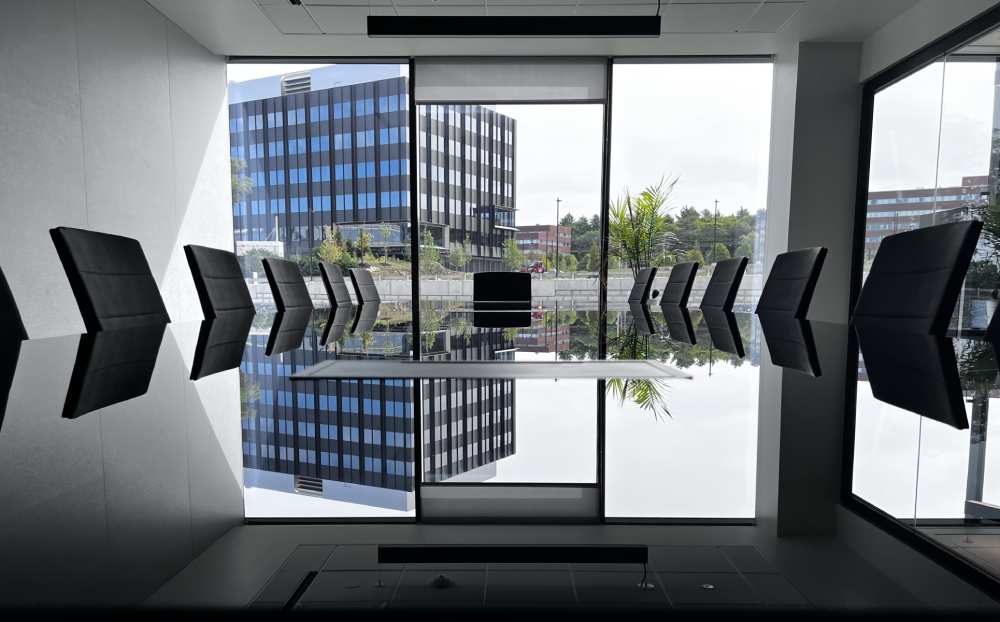
At first glance, office furniture decisions seem simple: leadership sets a budget, compares vendors, and selects products that fit the desired look and price.
But for facility managers—the people responsible for keeping workplaces running—those decisions rarely feel simple.
Furniture isn’t just something you buy and forget. It’s used every day, moved constantly, repaired regularly, and expected to perform for years. When leadership treats furniture as a one-time expense rather than a long-term operational asset, it creates friction that manifests in higher maintenance costs, inefficiencies, and employee frustration.
Lyco Workspace Solutions routinely hears the same themes. Facility managers want practicality, durability, and alignment with how workplaces function—not luxury.
Here’s what they wish leadership better understood.
1. The Lowest Price Usually Costs More in the Long Run
Budget talks often begin and end with upfront cost.
While upfront cost matters to procurement, facility managers are responsible for the entire lifecycle—beyond the initial purchase.
Lower-cost furniture—especially products not built for commercial environments—tends to break down faster. Drawers fail, laminates chip, mechanisms loosen, and entire units need to be replaced far sooner than expected.
According to the International Facility Management Association, facility-related costs—including operations and maintenance—can represent a significant portion of overall business expenses.
Source: https://www.ifma.org/about/what-is-facility-management/
Replacing furniture every few years instead of keeping it for a decade quickly increases costs.
What facility managers experience:
- Frequent replacements instead of long-term use
- Increased maintenance requests
- Disruptions to daily operations
What leadership often overlooks:
- Total cost of ownership
- Warranty coverage and serviceability
- The cost of downtime and replacement cycles
2. Maintenance Is Constant—Not Occasional
Furniture changes with a dynamic workplace; people constantly adjust, move, and reconfigure their spaces.
Facility managers are dealing with:
- Loose hardware
- Broken components
- Worn surfaces
- Power and data issues
…every single week.
The Building Owners and Managers Association (BOMA) emphasizes that ongoing maintenance and operations are a major component of facility costs, reinforcing the need for durable, serviceable assets.
Furniture not intended for commercial use or lacking accessible replacement parts can cause minor issues to escalate quickly.
What facility managers need:
- Furniture systems that can be repaired, not replaced
- Easy access to parts and support
- Durable materials that hold up over time
3. Space Planning Is More Than Fitting People Into a Floor Plan
From a leadership perspective, space planning is often about efficiency—maximizing the number of people who can fit into a space.
Leadership often sees space planning as a numbers game, but facility managers are concerned with how spaces function day to day.
Poor layouts create bottlenecks, limit collaboration, and lead to constant reconfigurations. Every time a space needs adjustment, it requires time, labor, and sometimes additional furniture.
Research from JLL shows that organizations are rethinking workplace design to balance flexibility, collaboration, and employee experience in today’s hybrid environment.
Facility managers focus on:
- Workflow and movement
- Access to power and data
- Ergonomics and usability
- Flexibility for future changes
Leadership often focuses on:
- Square footage
- Headcount density
- Initial layout cost
That disconnect means spaces optimized for floor plans can underperform for real work, highlighting the difference in perspective.
4. Hybrid Work Has Increased Wear and Complexity
Hybrid work has made furniture needs more complex, not less.
Shared desks, hoteling stations, and collaborative spaces mean more frequent use by more people, increasing wear and demanding higher quality.
According to the Gensler U.S. Workplace Survey, only about 40% of workers report having an ideal workplace experience, highlighting a gap between design and usability.
Facility managers are the ones managing that gap.
Common issues in hybrid environments:
- Inconsistent or worn shared workstations
- Lack of integrated power and connectivity
- Furniture not designed for high turnover
What leadership should recognize: Shared environments demand better—not cheaper—furniture, while facility managers see durability and functionality as essential.
5. Furniture Directly Impacts Employee Experience
Furniture choices shape budgets and affect how employees feel at work.
Uncomfortable chairs, awkward desks, and poor workstations cause fatigue, frustration, and lower productivity.
The American Society of Interior Designers highlights the connection between workplace design and employee well-being and performance.
Source: https://www.asid.org/resources/research
Facility managers often hear the feedback first:
- “My chair isn’t comfortable.”
- “I don’t have enough space to work.”
- “This setup doesn’t work for what I do.”
Those small complaints can turn into bigger issues over time.
6. Standardization Makes Everything Easier
A top operational challenge is inconsistency.
Different departments buying different furniture creates:
- Maintenance headaches
- Mismatched components
- Difficulty sourcing replacements
When organizations standardize furniture, it simplifies maintenance, replacement, and scaling across locations.
Benefits of standardization:
- Faster repairs and replacements
- Consistent employee experience
- Easier scaling across locations
- Better vendor relationships
Facility managers push for standardization to reduce complexity. Without it, every issue becomes harder to solve.
7. Office Furniture Should Be Treated as Infrastructure
Office furniture is functional, not just decorative.
Desks support technology. Workstations enable collaboration. Seating affects health and productivity. Storage impacts organization and efficiency.
When furniture is treated as décor, decisions prioritize cost and appearance over function.
When it’s treated as infrastructure, decisions prioritize:
- Durability
- Performance
- Flexibility
- Long-term value
Shifting the focus from appearance to infrastructure leads to meaningful improvements.
How Lyco Workspace Solutions Bridges the Gap
At Lyco Workspace Solutions, we work with both leadership teams and facility managers to align priorities.
Our approach centers on real-world use, not just product selection.
We help by:
Understanding operational realities
We listen to facility managers and turn daily challenges into strategic recommendations.
Specifying commercial-grade solutions
We select every product for durability, serviceability, and value.
Designing for flexibility
We build workspaces to evolve, reducing costly redesigns.
Supporting the full lifecycle
From planning to installation to reconfiguration, we stay involved beyond the purchase.
The Bottom Line
Facility managers and leadership want the same result: an efficient, supportive workplace within budget.
The disconnect comes from how those goals are approached.
When leadership understands:
- The true lifecycle cost of furniture
- The realities of maintenance
- The complexity of modern workplace design
With this understanding, organizations make more effective decisions.
Aligning decisions with how workplaces function creates environments that truly perform. If you’re ready to bridge the gap between leadership and facility operations, reach out to Lyco Workspace Solutions to start improving your office today.
FAQ: Office Furniture & Facility Management
Why is commercial-grade office furniture important?
Commercial-grade furniture is built for durability and high usage. It lasts longer, performs better, and reduces long-term maintenance and replacement costs.
How long should office furniture last?
High-quality office furniture can last 10–15 years or more. Lower-quality furniture may need to be replaced within just a few years.
What is the lifecycle cost of office furniture?
Lifecycle cost includes the total cost of ownership—purchase, maintenance, repairs, and replacement over time—not just the initial price.
How does furniture impact employee productivity?
Ergonomic and functional furniture improves comfort, reduces fatigue, and helps employees work more efficiently.
What should leadership consider when purchasing office furniture?
Leadership should evaluate durability, flexibility, maintenance requirements, warranty coverage, and long-term value—not just upfront cost.
How can companies align leadership and facility managers?
Involving facility managers early in the decision-making process—and working with experienced partners like Lyco—helps ensure smarter, more effective outcomes.